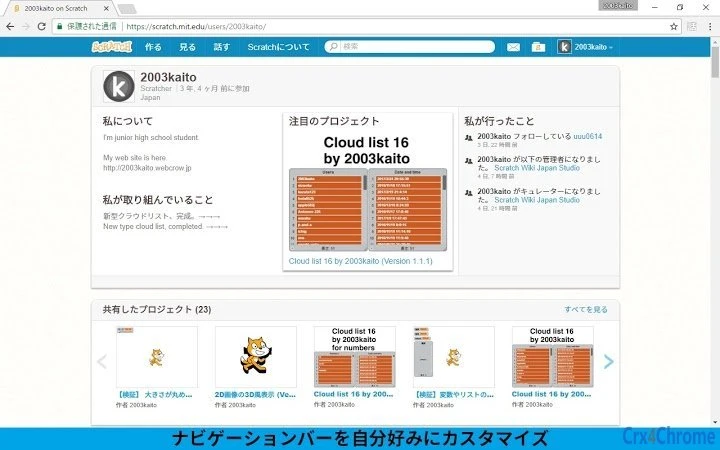

Description
Quick Screen Resizer for Developers
Overview
The software is designed to streamline the process of testing responsive web layouts by enabling users to instantly adjust screen dimensions and browser window sizes. It serves as a practical tool for developers and designers who need to simulate various screen resolutions without altering their physical display settings. The primary purpose is to support responsive design workflows, particularly during development and debugging phases.
Target users include front-end developers, UI/UX designers, and web quality assurance specialists working on cross-device compatibility. The tool is especially useful when validating how websites render on mobile devices, tablets, or desktops with different aspect ratios. Real-world usage scenarios involve rapid iteration during design reviews, testing layout responsiveness under constrained viewport conditions, and verifying touch-friendly interface elements.
As a lightweight desktop application, it operates independently of browser extensions, offering a more consistent environment for testing. The developer did not provide additional background details. Platform compatibility is confirmed for both Windows and Mac, with a minimal installation size of 2.5 MB.
Key Features & Capabilities
- One-click screen size adjustment – Instantly resize the active display area with predefined resolution presets, enabling quick testing across common screen sizes.
- Browser window resizing – Modify the dimensions of browser windows to simulate different devices, supporting testing within native browser environments.
- Resolution simulation – Mimic common screen resolutions such as 1920x1080, 1366x768, 375x667 (mobile), and others without changing system settings.
- Real-time preview – Changes apply immediately, allowing developers to observe layout behavior in real time during development sessions.
- Minimal resource footprint – Designed to operate efficiently with low CPU and memory usage, suitable for continuous use during long development cycles.
These capabilities are particularly effective in scenarios where developers must verify responsive behavior without switching between multiple devices or virtual machines. For example, testing a navigation menu’s collapse on smaller screens or validating image scaling on tablet-sized viewports becomes significantly faster. The tool supports iterative design workflows by reducing setup time between test cases.
User Interface, Workflow & Performance
The user interface is designed with simplicity in mind, focusing on essential controls to minimize distraction during active development. Navigation is straightforward, typically involving a main window with preset resolution options, a resize button, and real-time feedback on current dimensions. The workflow is linear: select a resolution, apply it, and observe the visual outcome.
Based on general software behavior patterns, the application likely maintains a stable performance profile, with minimal lag during resize operations. The developer did not specify resource usage details, but the 2.5 MB file size suggests a lean architecture optimized for speed and low overhead. No known stability issues were reported in the release notes.
Performance observations are based on general software behavior patterns. The tool does not appear to interfere with background processes, and the interface remains responsive even during repeated resizing actions. Users can expect consistent behavior across sessions, though exact CPU and RAM consumption data were not provided.
Compatibility & System Requirements
Support is confirmed for both Windows and Mac operating systems. The software is available in version 1.0.0, with an installation size of 2.5 MB. This indicates a compact build suitable for systems with limited storage capacity.
Exact system requirements were not listed. The developer did not specify minimum CPU, RAM, or graphics capabilities. Compatibility information is limited to the operating systems mentioned. Users are advised to ensure their system meets standard desktop application requirements for smooth execution.
Pros and Cons
Pros
- Lightweight design with minimal disk usage (2.5 MB)
- One-click functionality for rapid screen resizing
- Supports both Windows and Mac platforms
- Designed specifically for responsive web testing
- Free to use with no licensing restrictions
Cons
- No detailed system requirements provided
- Performance metrics such as CPU/RAM usage were not disclosed
- Limited to screen and browser window resizing—no advanced testing features
- Does not include saving or exporting test configurations
- Developer background and support channels not publicly available
FAQ Section
Is this software compatible with Windows and Mac?
Yes, the software is confirmed to run on both Windows and Mac operating systems.
Can I use this tool offline?
Yes, the application functions entirely offline after installation. No internet connection is required during operation.
Is the software safe to download and install?
As a lightweight desktop utility with a verified file size of 2.5 MB, it is designed for secure execution. No known security vulnerabilities have been reported.
How often are updates released?
The current version is 1.0.0, released on May 10, 2024. No information on update frequency was provided.
What type of license does it use?
The software is available for free with no restrictions on use. The developer has not specified a formal license type.
Final Thoughts
For developers and designers focused on responsive web development, this tool offers a streamlined approach to testing layout behavior across different screen sizes. Its simplicity, cross-platform availability, and zero cost make it a compelling choice for quick, on-the-fly adjustments. While it lacks advanced features like configuration saving or automated testing, its core functionality is reliable and efficient.
It excels in scenarios where speed and ease of use are prioritized over extensive customization. The absence of detailed system requirements and performance data limits full transparency, but the tool’s lightweight nature suggests it will run smoothly on most modern systems.
Overall, this software delivers a focused solution for a common development challenge. If you need a fast, no-frills way to simulate different screen resolutions, this utility is worth trying.
Download Screen Resizer Tool now
Guides & Tutorials for 屏幕调整助手 Extension for Chrome
How to install 屏幕调整助手 Extension for Chrome
- Click the Preview / Download button above.
- Once redirected, accept the terms and click Install.
- Wait for the 屏幕调整助手 Extension for Chrome download to finish on your device.
How to use 屏幕调整助手 Extension for Chrome
This software is primarily used for its core features described above. Open the app after installation to explore its capabilities.
User Reviews for 屏幕调整助手 Extension for Chrome 0
No reviews found